에이전트 지원 소프트웨어 is transforming customer service from a stressful, reactive function into a confident, high-performance powerhouse. By giving agents real-time guidance, instant knowledge, and intelligent automation, it helps every interaction become faster, more accurate, and more human. Understanding the role of AI in customer loyalty shows how these tools not only streamline operations but also strengthen customer relationships, turning every interaction into an opportunity to build loyalty.
Whether you run a growing support desk or a large contact center, knowing how to deploy agent assist effectively can unlock major gains in productivity, customer satisfaction, and employee morale.
Effective contact centers rely on more than just technology—they need a strategy that integrates people, processes, and innovative tools. Organizations exploring cutting-edge computing platforms can enhance the efficiency of AI-driven solutions, ensuring that agents have seamless access to critical insights. By combining this with supercomputing resources for AI applications, companies can handle complex data in real time, allowing agent assist software to deliver precise recommendations instantly.
Marketing and customer engagement also play a vital role in retention. Leveraging insights from advanced customer marketing strategies helps support teams anticipate needs, while consulting marketing runners for actionable guidance provides practical approaches to personalize interactions. This holistic perspective not only improves agent performance but also fosters stronger customer loyalty.
Financial stability and resource allocation can’t be overlooked. Businesses that monitor top financial resources for operational efficiency can prioritize investments in technology, staff training, and AI tools. With proper allocation, agent assist software becomes more than just a support tool—it transforms into a strategic asset that strengthens both employee satisfaction and overall customer experience.
By combining human-centric approaches, technology, and intelligent automation, modern contact centers can thrive in today’s competitive landscape. Each interaction guided by agent assist software becomes an opportunity to delight customers while empowering agents to perform confidently and efficiently.
Top 10 Agent Assist Software Solutions for Modern Contact Centers
Choosing the right agent assist software can transform your contact center from a reactive support hub into a proactive, customer-focused powerhouse. Here’s a list of the top solutions available today, highlighting features, benefits, and what makes each one stand out.
1. Bright Pattern
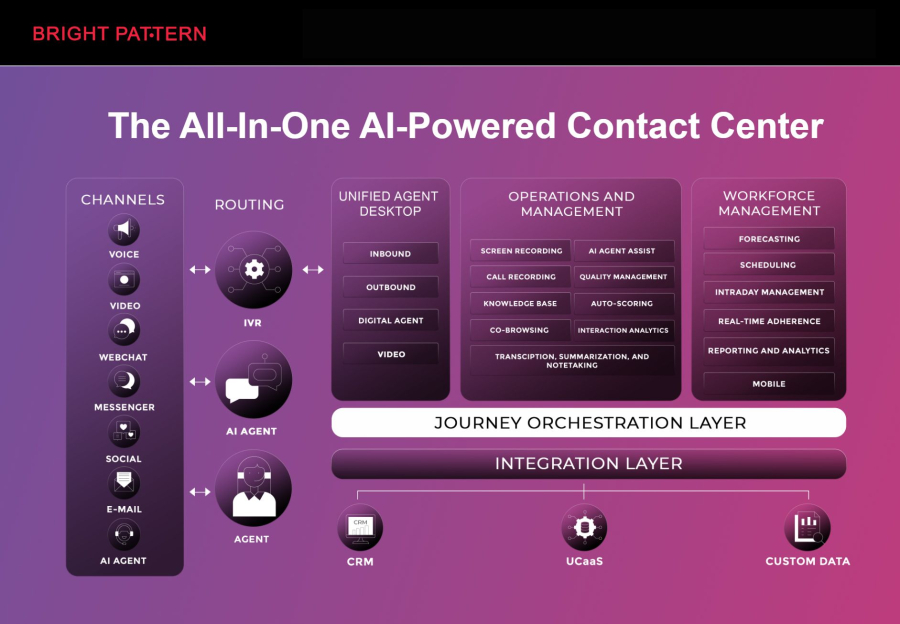
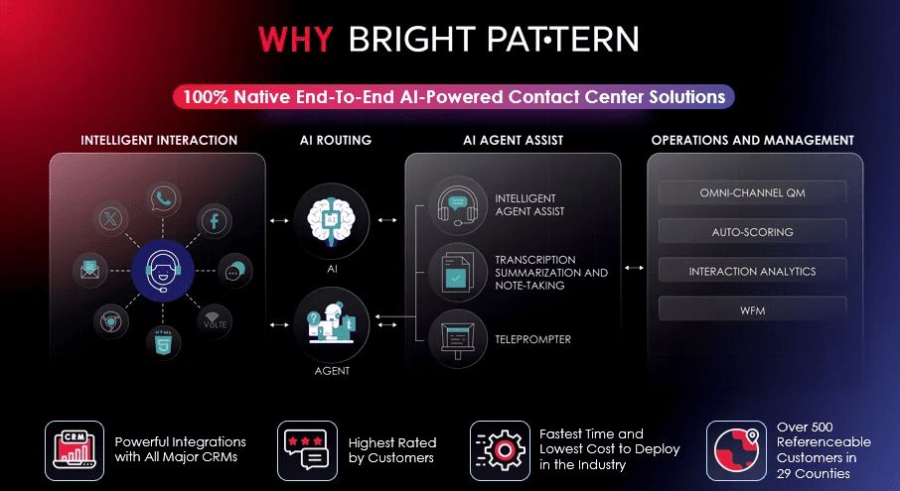
Bright Pattern is a leading agent assist software designed to streamline contact center operations, boost agent productivity, and improve customer satisfaction. Its AI-driven features provide real-time guidance, instant access to knowledge bases, and automated workflows that help agents handle inquiries faster and more accurately.
Key benefits of Bright Pattern agent assist software:
- Real-time suggestions during customer interactions
- Integration with CRM, marketing, and collaboration tools
- Automated call routing based on AI insights
- Omnichannel support including voice, chat, email, and messaging apps
- Analytics dashboards for monitoring agent performance and customer satisfaction
Bright Pattern is trusted by organizations of all sizes to enhance agent efficiency while delivering a more human and responsive customer experience.
2. Genesys
Genesys offers advanced agent assist capabilities through AI-powered workflows and omnichannel support. Its solution emphasizes predictive routing and analytics to optimize every interaction.
3. Five9
Five9 provides cloud-based agent assist software that automates routine tasks and empowers agents with real-time guidance and call scripting.
4. NICE inContact
NICE inContact combines AI-powered insights with intelligent routing to improve agent performance and customer satisfaction across multiple channels.
5. Talkdesk
Talkdesk offers AI-assisted tools that help agents quickly access information, automate repetitive tasks, and resolve customer issues efficiently.
6. Zendesk
Zendesk’s agent assist software focuses on contextual guidance and automation to improve ticket resolution times and enhance overall support quality.
7. Avaya
Avaya delivers agent assist features integrated with contact center infrastructure, offering real-time recommendations and workflow automation.
8. RingCentral
RingCentral provides cloud contact center solutions with agent assist capabilities, including AI-driven suggestions and analytics to optimize customer interactions.
9. HubSpot Service Hub
HubSpot Service Hub leverages AI tools to provide agents with relevant information, task automation, and reporting to enhance the customer experience.
10. Salesforce Service Cloud
Salesforce Service Cloud integrates agent assist software to help agents deliver fast, accurate, and personalized support using AI-driven insights.
What Is Agent Assist Software?
Agent assist softwareis a category of tools that support live agents during customer interactions. Instead of replacing agents, it works alongside them, providing real-time recommendations, information, and automations that make their jobs easier and their performance more consistent.
Typically used in contact centers, help desks, and customer success teams, agent assist tools sit between the agent and the various systems they use. They interpret what is happening in the conversation and surface the most helpful next action or answer.
Key characteristics of agent assist software
- Real timesupport while the interaction is happening, not after the fact.
- Context awaresuggestions based on what the customer is saying or typing.
- Integratedwith your CRM, ticketing, telephony, and knowledge base systems.
- Assistive, designed to augment human agents instead of replacing them.
How Agent Assist Software Works
While each product differs, most agent assist solutions follow a similar high level pattern: listen, understand, recommend, and automate.
1. Listening to conversations
Agent assist tools connect to the channels where your agents talk to customers, such as:
- Voice calls in the contact center
- Live chat and messaging conversations
- Email, tickets, and case management systems
For voice, speech recognition converts spoken words into text. For digital channels, the tool analyzes the messages directly.
2. Understanding intent and context
Using natural language processing and predefined business logic, the software identifies:
- The customer’sintent(for example, billing question, password reset, cancellation request).
- Relevantcontextfrom CRM records and past interactions.
- Potentialsentiment, such as frustration, confusion, or satisfaction.
3. Providing recommendations to agents
Once it understands the situation, the agent assist tool surfaces targeted help, such as:
- Suggestedknowledge base articlesor FAQs.
- Dynamicscriptstailored to the customer’s issue.
- Real timecompliance promptsand reminders.
- Recommendednext best actions, such as issuing a refund or escalating a case.
4. Automating repetitive steps
Beyond suggestions, advanced agent assist software can automate routine tasks, including:
- Auto filling forms with verified customer data.
- Auto drafting call notes or ticket summaries.
- Triggering workflows in CRM or ticketing tools.
- Checking order status or account eligibility via integrations.
The result is a smoother workflow where agents focus on human connection and problem solving, while the software handles lookups and repetitive steps.
Key Benefits of Agent Assist Software
Agent assist software delivers value across the entire support organization. Here are the core benefits teams typically see when they implement it effectively.
1. Higher first contact resolution (FCR)
With the right answers and actions presented in real time, agents can resolve more issues during the very first interaction. Fewer follow ups and escalations mean happier customers and lighter queues.
2. Faster handle times without sacrificing quality
Instead of searching multiple systems or flipping through static scripts, agents receive dynamic recommendations as they go. This typically leads to:
- Reducedaverage handle timefor calls and chats.
- Shorterafter call workthanks to auto summaries.
- Less time spent on manual data entry and navigation.
3. Consistent, compliant interactions
Agent assist tools can be configured to enforce certain steps and disclosures, which supports:
- Better adherence toscripts and guidelines.
- Strongerregulatory and policy compliance.
- Reduced risk of missing crucial information or approvals.
4. Faster onboarding and upskilling
New hires no longer need to memorize every process or document. Instead, they learn by doing with a digital coach at their side. This can help you:
- Shortentraining cyclesfor new agents.
- Increase confidence earlier in an agent’s tenure.
- Keep knowledge fresh as policies and products evolve.
5. Better agent experience and reduced burnout
Contact center work is demanding. Agent assist tools alleviate much of the cognitive load by taking care of complexity in the background. That leads to:
- Fewerfrustrating searchesfor information.
- Less fear ofmaking mistakeson complex or high stakes calls.
- Greater sense ofcontrol and supportduring busy periods.
When agents feel supported and successful, turnover typically decreases, and customer interactions become warmer and more empathetic.
6. Actionable insights for leaders
Because agent assist software sits across many interactions, it can highlight:
- Common friction points customers face.
- Gaps in your knowledge base or processes.
- Training opportunities for teams or individuals.
Leaders receive data driven visibility that informs smarter staffing, training, and process improvement decisions.
Essential Features to Look For
Not all agent assist platforms are the same. When evaluating options, it is helpful to prioritize features that will drive the biggest impact for your organization.
Core functionality
- Real time suggestionsfor responses, next steps, and relevant content.
- Integrated knowledge searchthat surfaces the best article automatically.
- Workflow automationsuch as ticket updates, notes, and dispositioning.
- Call and chat summarizationto save agents time after each interaction.
Intelligence and customization
- Configurable rulesto reflect your internal policies and escalation paths.
- Support for multiple languagesif you serve global customers.
- Sentiment and intent detectionto adapt in real time.
- Customizable suggestionsbased on team, queue, or customer segment.
Integrations and compatibility
- Native connections to majorCRMandticketingsystems.
- Compatibility with existingtelephonyand contact center platforms.
- Access tohistorical datafor learning and optimization.
Governance and controls
- Robustpermissions and rolesfor admins, supervisors, and agents.
- Clearaudit trailsof suggestions, actions, and automations.
- Tools to managedata retentionand access according to policy.
Agent Assist vs. Chatbots vs. Full Automation
Agent assist software is often mentioned alongside chatbots and fully automated solutions, but it serves a distinct purpose.
|
Solution type |
Primary user |
Role in customer service |
|
Agent assist |
Human agents |
Supports agents with guidance, content, and automation during live interactions. |
|
Chatbots |
End customers |
Handles simple, repetitive requests directly, often before reaching an agent. |
|
Full automation |
Systems |
Completes whole processes without human involvement once triggered. |
In a modern contact center, these three solutions often work together. Chatbots resolve common issues, agent assist empowers humans for more complex cases, and automation streamlines back office work.
Real World Use Cases and Success Patterns
Across industries, certain use cases consistently deliver strong results with agent assist software.
Customer support and technical help desks
- Password resets and access issueshandled with step by step prompts.
- Diagnosticsfor technical problems guided by scripted checklists.
- Knowledge article suggestionsthat adapt as the conversation unfolds.
Billing, subscription, and account services
- Real time policy checksfor refunds, credits, or plan changes.
- Automated calculationsto reduce errors on estimates or adjustments.
- Guided retention flowsthat help agents save at risk customers.
Sales and customer success teams
- Prompted discovery questionsto uncover customer needs.
- Next best offer suggestionsbased on profile and past purchases.
- Automated notesthat capture key moments from calls and demos.
Compliance sensitive industries
- Mandatory disclosure promptsduring calls.
- Script adherence monitoringsupported by real time alerts.
- Documentation workflowsthat reduce the risk of missing records.
Across these scenarios, organizations often report more consistent customer experiences, fewer escalations, and faster resolution times once agent assist is in place and tuned to their environment.
How to Successfully Implement Agent Assist Software
Implementation is where agent assist projects either thrive or stall. A structured rollout helps you capture value quickly while building trust with agents and stakeholders.
1. Define clear objectives and metrics
Before choosing or deploying a tool, identify what success looks like. Common goals include:
- Reducingaverage handle timeby a specific percentage.
- Improvingfirst contact resolution.
- RaisingCSAT or NPSscores.
- Shorteningnew hire ramp uptimelines.
Clear targets guide your configuration and help you evaluate results.
2. Start with high impact flows
Begin by mapping the most frequent or high value contact reasons. These are often the best starting points because improvements are immediately visible. Examples include:
- Top five billing or account questions.
- Most common technical issues.
- Critical compliance sensitive interactions.
3. Engage agents early
Agent buy in is essential. Involve frontline representatives from the beginning by:
- Inviting them to share what slows them down today.
- Co designing scripts, prompts, and workflows.
- Using pilot groups to test and provide feedback.
When agents feel ownership, they are far more likely to embrace the new tool.
4. Integrate with existing systems
To avoid toggling between screens, connect agent assist with the platforms your teams already use, such as CRM, ticketing, and telephony. Smooth integrations enable:
- Single sign on and unified interfaces.
- Automatic data synchronization.
- Less context switching during calls or chats.
5. Roll out in stages and iterate
Rather than switching everything on at once, phase your rollout:
- Pilot with a single team or queue.
- Refine prompts, suggestions, and automations based on results.
- Expand to more use cases and teams.
This staged approach allows you to tune the experience and demonstrate value at each step.
Measuring ROI and Performance Impact
To sustain investment in agent assist software, you need visibility into how it is performing. A thoughtful measurement strategy combines operational, customer, and employee metrics.
Operational metrics
- Average handle timebefore and after deployment.
- After call work durationwith and without auto summaries.
- First contact resolution rateacross contact reasons.
- Escalation and transfer ratesover time.
Customer experience metrics
- CSATor post interaction survey scores.
- NPS, if you track it for service interactions.
- Customereffort scoreswhere applicable.
Agent experience metrics
- Agent satisfactionor engagement survey results.
- Turnover and retentiontrends.
- Feedback on whether the tool is genuinely helpful or needs tuning.
By comparing these indicators across teams that have and have not adopted agent assist, you can demonstrate its impact and identify further optimization opportunities.
Common Myths and Questions About Agent Assist Software
Does agent assist replace human agents?
Agent assist is designed toaugmenthuman agents, not replace them. It takes care of information retrieval, prompts, and routine steps, while humans handle empathy, judgment, and complex decision making.
Will it make interactions feel robotic?
When implemented thoughtfully, agent assist actually makes conversations more human. Because agents are not scrambling for answers, they can focus on listening, understanding, and responding naturally. Scripted content can be adapted to match your brand voice and adjusted based on agent feedback.
Is it only for large contact centers?
While large operations can see especially strong returns, smaller teams also benefit. For a lean support team, agent assist can function as a real time coach and process guide, helping new hires perform like experienced agents more quickly.
Is data privacy at risk?
Modern solutions are built with data protection in mind, and organizations remain in control of what data is processed, how long it is stored, and who can access it. During evaluation, it is important to review security certifications, access controls, and data handling practices to ensure alignment with your policies.
Future Trends in Agent Assist
Agent assist technology is evolving rapidly, opening up new possibilities for both efficiency and customer delight. Emerging trends include:
- Richer context awareness, combining interaction history, customer behavior, and system data to provide even more precise recommendations.
- Deeper workflow orchestration, where agent assist not only suggests actions but orchestrates complex multi step processes behind the scenes.
- Adaptive coachingthat tailors guidance based on an individual agent’s strengths, experience level, and past performance.
- Broader channel coverageacross voice, chat, social, in app, and emerging channels for a unified support experience.
As these capabilities mature, organizations that invest early in agent assist will be well positioned to deliver consistent, high quality service at scale.
Final Thoughts: Turning Every Agent into a Top Performer
Agent assist software is more than a productivity tool. It is a strategic lever for transforming your contact center into a confident, data driven, and customer focused operation.
By supporting agents in real time, streamlining repetitive work, and unlocking better insights, agent assist helps you:
- Raise the performance of every agent, not just your top performers.
- Deliver faster, more accurate, and more empathetic service.
- Create a work environment where agents feel supported, not overwhelmed.
For organizations serious about customer experience, agent assist software has become a powerful way to turn every interaction into an opportunity to impress, retain, and grow customer relationships.
